ƒ  a  r  ƒ  e  t  c  h  i  n  g
mystery | meaning | movement
  • home
    • Why Farfetching?
  • musings (blog)
  • movies
    • A Beautiful Mind
    • The Hunger Games
    • Tron: Legacy
  • music
    • Foals >
      • Bad Habit
    • Mumford & Sons >
      • Babel >
        • "Below My Feet"
      • Sigh No More
    • Nickel Creek >
      • Doubting Thomas
  • media
    • A Game of Thrones (A Song of Ice and Fire)
  • minister
    • Classes
    • PIF
    • Sermons >
      • Written Sermons
      • Audio Sermons
      • Video Sermons
    • Weddings
  • me
    • Where Am I?
    • Ender's Gospel
  • Book: Tahoe
    • Chapter One: We All Live in a Yellow School Bus
    • Chapter Two: Strawberry Fields Forever
    • Chapter Three: Nash-Vegas
    • Appendix: Eulogy
  • The Lost Art of Romance
  • Faith, Inc.
  • Evans in Seminary
  • Evans in Africa

Hikina-a-ka-la at Lydgate Beach Park

3/25/2014

0 Comments

 
An article I wrote for a forthcoming driving-CD of the island of Kaua'i.  Visit www.kauaidrivetours.com for more information.

Picture
Approaching Wailua from the south, you will see Lydgate Beach Park on your right just before you cross over the Wailua River.  This place of sea and sand marks the sacred gateway into the heart of the island.  Called hauola or “dew of life,” this area around the river’s mouth was well renown as a place of healing and wholeness.  Here many ancient Tahitian voyages would embark and arrive, and many ali’i or chiefs resided.  Remnants of large volcanic boulders just off shore create a small, somewhat protected area for swimming and snorkeling.  The last king of Kaua‘i, King Kaumualii, used to swim here.

At the north end of Lydgate Beach Park next to the river’s mouth is a heiau erected in the 14th century.  The original structure, called Hikina-a-ka-la or “The Rising of the Sun,” rose like a mighty fortress, measuring 80 feet wide and nearly 400 feet long, with walls six feet high and over eight feet thick.  Each day at dawn, the sun’s first rays broke through the sea’s salt spray and warmed the stacked stones.  Kahuna or priests would greet the rising sun with chants and prayers.  They placed wooden statues or ki’i along the river wall to keep watch and sway with the shifting tides. 

Picture
Within the heiau walls was a pu’uhonua, a place of refuge for those fleeing a crime.  After a few days of performing sacred rights, a refugee would be released without being punished.  Various people sought refuge here during times of war.  

Today, all that remains are foundation stones amidst a grove of coconut trees.  Remember that this heiau is still a sacred place.  People often leave offerings wrapped in ti leaves.  May these offerings and this sacred place continue to offer healing for all. 

0 Comments

HOLOHOLOKU HEIAU 

3/22/2014

0 Comments

 
An article I wrote for a forthcoming driving tour on CD for Kaua'i.  Visit www.kauaidrivetours.com for more information.
Picture
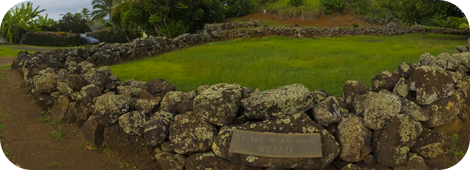
Turning onto Kuamo‘o Road (Highway 580), you are now entering Wailua Nui Honoa, the Great Sacred Wailua river basin, one of the two most sacred sites in all of the Hawaiian Islands.  Less than a quarter mile on your left is a small turnout at the Holoholoku Heiau, the oldest place of worship on Kauai.  Here the Hawaiians honored the beginning and end of life. 

The low stone wall you see, measuring 24 by 40 feet, marks the original foundation of the heiau.  This heiau honored all of the Hawaiian gods, giving particular recognition to Ku.  Ku literally means “rising upright,” as in the rising sun over the ocean nearby, and often the Hawaiians worshipped Ku for good fortune and prosperity in their endeavors.  Archeologists believe animal or possibly human sacrifices were part of the worship here.
Picture
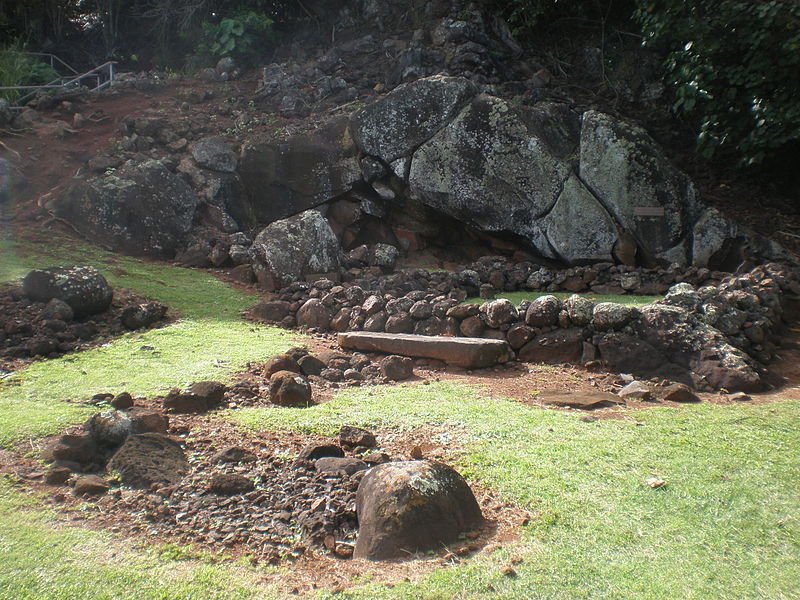
Just as life ends, so does it begin.  Walk a few meters beyond the heiau to a small cliff face and another sacred site called the Birthstone, where the last king of Kaua‘i, King Kaumualii, was born.  The flat sandstone in front of the small stone foundation marks the remains of a sacrificed dog, making the area kapu or forbidden to commoners.  
Picture
Inside the stone wall was a hut for the expectant mother.  When the time came, she leaned on the birthstone, Pohaku Hoohanau, to your left, and placed her feet on the umbilical stone, Pohaku Piko.  The umbilical cord, representing past connection, was wrapped in kapa leaves and wedged in the large crack in the cliff to protect it from rats.  A rat eating the cord meant the child would become a thief.  No matter one’s lineage, a future chief had to be born on this stone in order to be chief and absorb the sacred mana or energy of this place.  Here, place matters.

The modern staircase leads to a Japanese cemetery dating from the 1890s.  Return to your car to continue up Kuamo‘o Road, built on an ancient path called “The Way of the Kings.”  Many chiefs would travel along the Kuamo‘o or “Spine of the Lizard” on their annual pilgrimage, stopping at one of seven sacred sites, including Holoholoku, until they reached Mount Waialeale.
0 Comments

Shedding the Should: Identity Identification

2/27/2014

1 Comment

 
Since August 2013 when my two-year residency at First Pres Ann Arbor came to a close, I have been unemployed and working on a book about my grandfather.

I've discovered that writing is hard, and writing one's first book even is even harder.  Granted, I've been traveling throughout the fall and finally landed in Kaua'i with my wife Emily.  We are still trying to secure suitable housing in a place that is both incredibly beautiful AND expensive.

Not being settled or having a routine has not made the writing any easier (like the litote?  Anyone, anyone?? Not even my spellcheck?!).  And all the devilish thought-demons begin to emerge:
  • What stories have I told myself that aren't true?
  • Where am I "shoulding" on myself?  I should be this or I should be that...
  • Doesn't someone need me?
  • Why not let other set an agenda for me?  Striking out on one's own is just too hard.


So for inspiration, I have read a lot of blogs (notice: each word takes you a to different blog), not to mention a ton of eBooks and online videos.

One thing that has become apparent to me is aligning my goals in life with my identity.  

Now, I have never been very good at taking on a specific identity.  I identified as a "floater" in high school, unwilling to commit or see myself a part of any specific group.  Later in college, a mentor had me write "Who Am I?" at the top of the page and fill it out for the next week...

I still have that page, and it is still blank:
Picture
And in case you're wondering what is on the other side:
Picture
So yeah, I struggle with Who I am and My Purpose in Life.  Yet recently I've decided to make some headway in this area.  

I realize that my fear of taking on any identity keeps me muddled in a mental morass of what I am suppose to do day-to-day, let alone my purpose in life.

My solution: Take on an identity moment-by-moment, hour-by-hour.  

Maybe eventually I'll work my way up to a day, a week, a month... a lifetime.  

But for now, in this moment, I am a blogger.  Soon I will transition to being a writer and working on my book.  This afternoon I will be a frisbee thrower.  Tonight: a husband, a partner.  When I'm cooking, I am a cook.  When I'm reading, I am a reader.

Sounds simple enough.  And maybe once I get used to identifying with these different hats, I will be closer to identifying with me, Evans.  

Who is that guy, anyway?
1 Comment

All-Or-Nothing Marriage And Inequality

2/26/2014

1 Comment

 
Picture
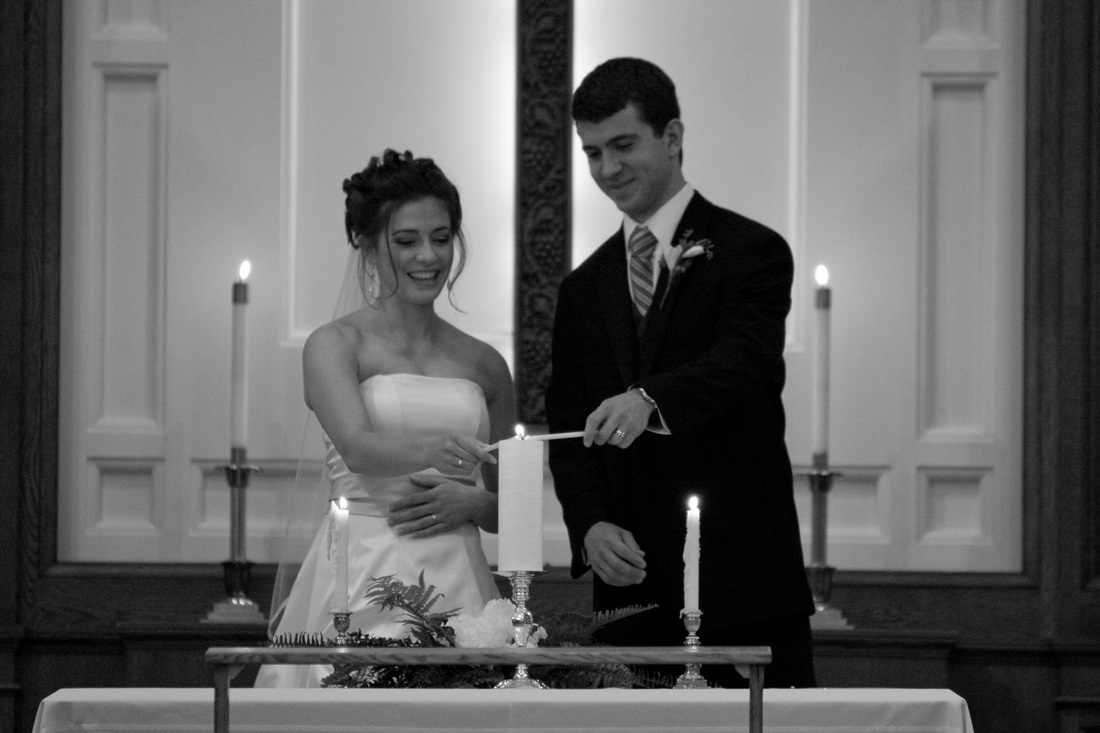
Emily and I lighting the unity candle at our wedding.
(The two candles behind us represent are deceased maternal grandfathers, George and Roy, while the two candles in front of us represent our families of origin.)
I just finished reading an excellent piece in the NYT on the current overall state of marriage.  I'm also currently trying to finish this post as my wife would like me to get off the computer and spend time with her!

The quick takeaways for me are:

  • Marriage has changed: we expect more out of the marriage and our mates than previous generations


  • Marriage takes time: those able to spend more time on their marriage get more out of it, those who spend less get less enjoyment or end up divorced


  • Marriage is unequal: those with more resources (i.e. rich) are more likely to stay together than those with less resources (i.e. poor).  

The resulting inequality marriage success rates reflect the broader inequality in our society.  The rich get richer (and stay married) while the poor get poorer (and get divorced).

What ways can we better support our marriages?  How can our livelihoods (i.e. jobs) support our spouses?  Will companies recognize that a healthy marriage makes for better (i.e. more productive) employees?

Marriage is hard work.  It is not all that is cracked up to be.  And yet don't those who choose to get married be given every opportunity and support to succeed?

I think so.
1 Comment

How Little We Know

2/24/2014

0 Comments

 
Picture
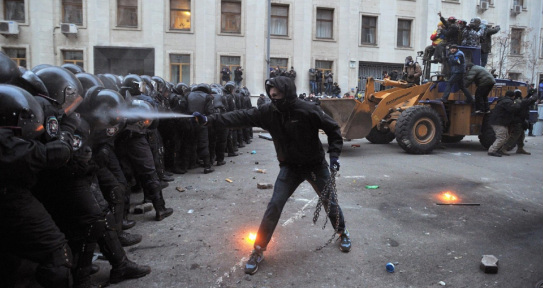
American hubris, here we go again.

In the wake of the Ukrainian uprising, there have been no shortage of Western opinions on how the U.S. should intervene or what the Ukranians should do.

Perhaps the best discussion I've heard was on my primary (and highly recommended) news source, Democracy Now!  
And perhaps the most general advice about possible American involvement in other country's affairs came at the end of this Thomas Friedman piece, "Don't Just Do Something. Sit There.":
But we should have learned some lessons from our recent experience in the Middle East: First, how little we understand about the social and political complexities of the countries there; second, that we can — at considerable cost — stop bad things from happening in these countries but cannot, by ourselves, make good things happen; and third, that when we try to make good things happen we run the risk of assuming the responsibility for solving their problems, a responsibility that truly belongs to them.
To summarize/paraphrase Friedman:
  1. We understand little of other country's complexities
  2. We may be able to stop bad things from happening, but only at considerable cost
  3. Trying to make good things happen replaces self-empowerment of the people

These points are powerful reminders to be cautious in finding solutions to others' problems, both as individuals and as a nation.
0 Comments

One Billion Rising

2/14/2014

0 Comments

 
Picture
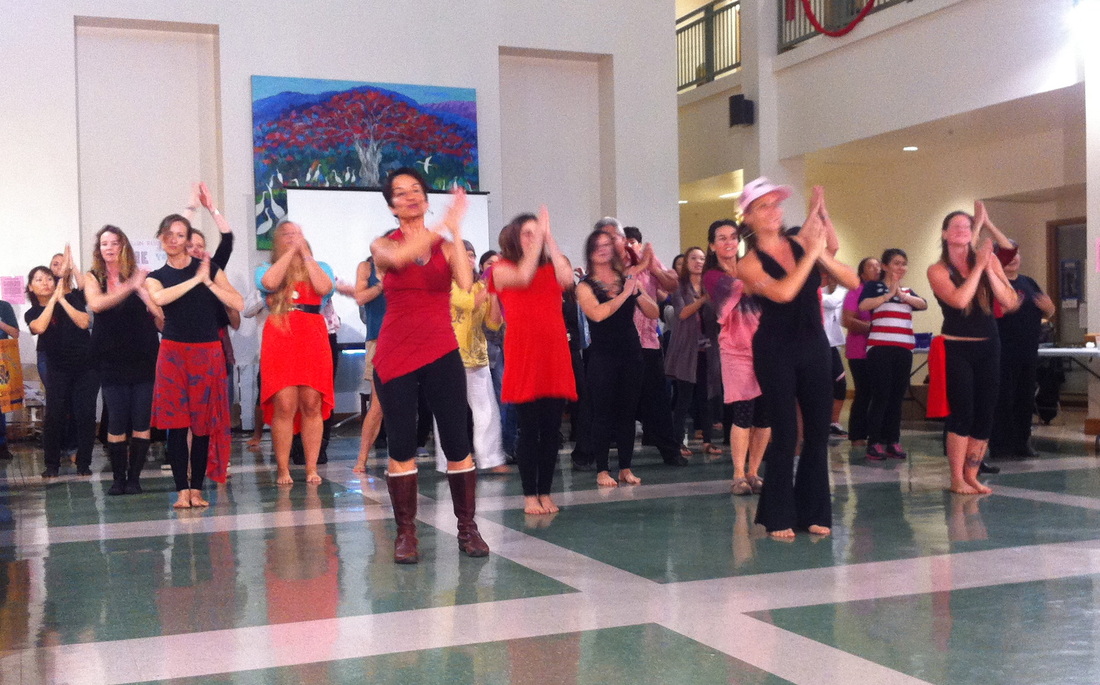
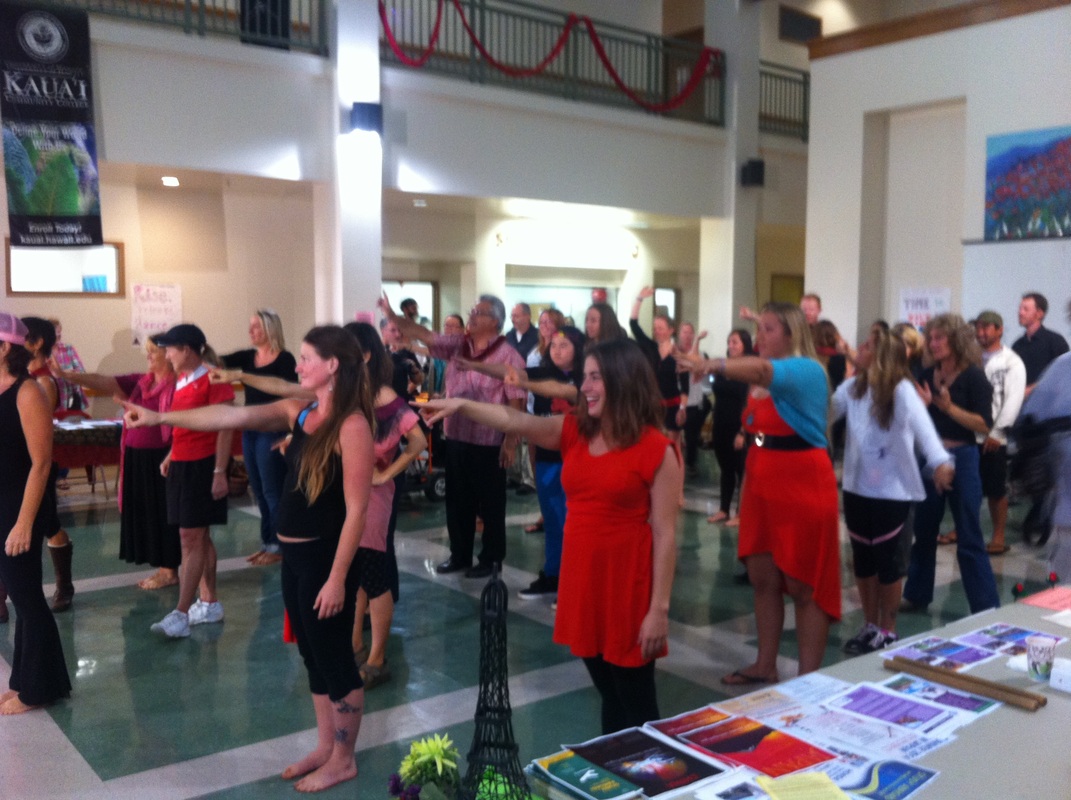
For the second year in a row, Emily participated in a V-day (Valentine's or Vagina, take your pick) event to celebrate women's bodies and bring attention to the abuse women suffer from around the world.
Picture
Last year we were in Ann Arbor on the Diag at the University of Michigan.  This year we were at the Kaua'i Community College of the University of Hawaii.
Picture
The choreographed dance was beautifully done, and ends with hands raised before they slowly lower and point right at you, the audience, to remind us that we all have a duty to stand up and defend women's rights.  

A powerful yet celebratory message.  You can listen to the amazing song, "Break The Chain," they danced to below.
One billion rising indeed.
0 Comments

What Drives Success?

2/3/2014

0 Comments

 
As my wife and I seek to make a living in a very beautiful but expensive place (Kaua'i), we are constantly exploring different ideas on how to be successful.  

That is, we are trying to answer: How do we make money such that we can stay and keep on living in this wonderful place?(!) 

People here in Kaua'i do all kinds of things to make a living.  Tourism is the number one industry, followed perhaps by the big agricultural industry (which has transformed from sugar cane to ranching to now GMO-testing or tourist ranches).  Then there is construction, environmental monitoring/protecting, bodywork, small businesses serving various clientele, etc.  

Overarching lesson: Each person has had to be quite creative to make a living here.

Given our experience, I read the NYT article, "What Drives Success?"  There are lots of details and anecdotes, but the core reasons that drive success culturally are in this key paragraph:
It turns out that for all their diversity, the strikingly successful groups in America today share three traits that, together, propel success. The first is a superiority complex — a deep-seated belief in their exceptionality. The second appears to be the opposite — insecurity, a feeling that you or what you’ve done is not good enough. The third is impulse control.
To summarize, cultures who have these traits/beliefs tend to be more successful as a group.  They believe they are:

  • They believe they are Exceptional
  • They feel they are Insecure
  • They have a high degree of Impulse Control

The last point is no surprise for those familiar with The Marshmallow Test:

So controlling one's impulses while having a sense of insecurity yet also a sense of exceptionality leads to success in groups, in general.  This makes sense to me, and therefore the stories we tell to ourselves and to each other are crucial to our belief system and our future success.

Here's to telling positive, inspirational stories that also remind us of our insignificance/mortality, all the while building up our patience and perseverance!  
0 Comments

Pastoral Care: Listening is a Skill

2/2/2014

0 Comments

 
One of my top skills on LinkedIn is "Pastoral Care."  

I've always found pastoral care to be an enigma.  Compared to doctors, firefighters, psychologists and others who give care to people, a pastor's care feels somehow both superficial and substantive.  

I would venture to say that most spiritual things embody this conflicting traits: superficial yet substantive.

Pastoral care training is essentially about becoming a better listener.  

It takes an incredible amount of attention and a lot of humility.  

It is like meditating in someone else's head.

I thought about this after reading this story from the comments section of this post:
"I remember a mini-Paradigm Shift I experienced one Sunday morning on a subway in New York. People were sitting quietly -- some reading newspapers, some lost in thought, some resting with their eyes closed. It was a calm, peaceful scene. Then suddenly, a man and his children entered the subway car. The children were so loud and rambunctious that instantly the whole climate changed.

The man sat down next to me and closed his eyes, apparently oblivious to the situation. The children were yelling back and forth, throwing things, even grabbing people's papers. It was very disturbing. And yet, the man sitting next to me did nothing. It was difficult not to feel irritated. I could not believe that he could be so insensitive to let his children run wild like that and do nothing about it, taking no responsibility at all. It was easy to see that everyone else on the subway felt irritated, too.

So finally, with what I felt was unusual patience and restraint, I turned to him and said, "Sir, your children are really disturbing a lot of people. I wonder if you couldn't control them a little more?"

The man lifted his gaze as if to come to a consciousness of the situation for the first time and said softly, 'Oh, you're right. I guess I should do something about it. We just came from the hospital where their mother died about an hour ago. I don't know what to think, and I guess they don't know how to handle it either.'

Can you imagine what I felt at that moment? My paradigm shifted. Suddenly I saw things differently, I felt differently, I behaved differently. My irritation vanished. I didn't have to worry about controlling my attitude or my behavior; my heart was filled with the man's pain. Feelings of sympathy and compassion flowed freely. "Your wife just died? Oh, I'm so sorry. Can you tell me about it? What can I do to help?"

Everything changed in an instant."

When we listen with intention and care, we get out of ourselves and into another.

We enter a new world.

And our world is forever changed.

May you listen today with all of our mind, all of your heart, all of your soul, and all of your strength.
0 Comments

Community as Key to Believing 

1/2/2014

1 Comment

 
It is the new year, and with it come all of the end-of-year summations, highlights and stories.  I was amused if not horrified to read that even less Republicans believe in evolution compared to four years ago, down to 43%.  

After reading the classics Robert Putnam's Bowling Alone and Sam Harris' The End of Faith, I wonder if people identify their religious beliefs not on scientific reasoning but community connections.  Our increased individualistic society is only made worse by internet companies that keep us in what Eli Pariser calls a Filter Bubble.  Yet finding common cause on the internet can create and support shared common values, of the religious or areligious type.

Community is key to believing.  We are influenced by those around us and the sites we visit.  Diversity is important not only to 'keep things interesting,' but also to ensure we do not become stagnant in our beliefs.  If we want to share our beliefs, be they secular or spiritual, it is better to do so through relationship rather than pure reason.
1 Comment

Canada* Makes Me Less Smart

9/9/2013

1 Comment

 
Picture
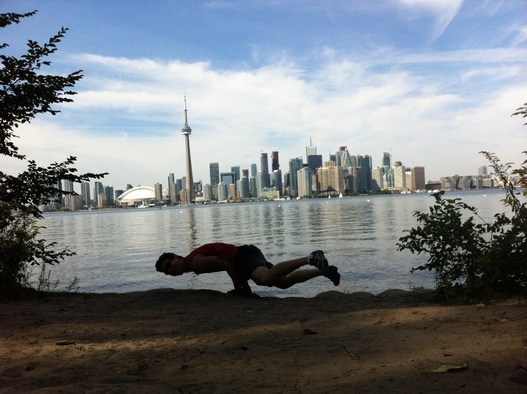
I was recently in Toronto, Canada where I biked along the lakeshore, took the ferry out to Toronto Island and biked some more before relaxing and playing frisbee on some nice beaches.  When I got back in the car to head to Niagara Falls, however, I was without a map - hard copy or on my various devices without an internet or cell connection.  I quickly realized how dependent I was on my smart phone, and how dumb I had become without it.

Indeed, having a smart phone is an addiction for many of us.  Those without cell or smart phones just want some peace and quite, even paying to get away from technology for a weekend.  The video below dramatizes what our lives have become in the smart phone / dumb person era:

The question then becomes, are we more or less connected now in the age of the mobile internet?  Some would argue that we are more connected to those far away but less connected to those around us, especially those we are physically with, and even ourselves.  There is an app for everything to get more and more done via multitasking, etc., and the more we do the more we have to manage and communicate in a never-ending cycle.  

What we really need is a breath of fresh air and to do less. However, it's hard to exit the race when everyone else is caught up in the same tide.  We have to come together, either to escape to technology-free weekends or to agree corporately that our sphere of work is not going to expect us to be available 24/7.  And the surprising thing is, when we set limits in when we work, we actually become more productive.  

Go figure.  But first, stay, relax, take some time to be outdoors and remember what it's like to be a human being without touching something electronic.

* It's not actually Canada that makes me less smart; just not having a cell plan that works in Canada!
UPDATE: A blessing I found in a section called "MAPLESS" from Jan Richardson's "In the Sanctuary of Women", p. 305.
And so let us give praise
for the places
that are mapless
chartless
without direction or sign.

Let us give thanks
for all they call forth:
for the questions
they require,
for the imagination
they summon,
for the path
they make
through the territory
of the heart.
1 Comment

    Author

    Evans McGowan

    Archives

    July 2014
    May 2014
    April 2014
    March 2014
    February 2014
    January 2014
    September 2013
    August 2013
    April 2013
    March 2013

    Categories

    All
    Adventure
    Africa
    Beach
    Bible Reference
    Biking
    Books
    Canada
    Community
    Economics
    Faith
    Hiking
    History
    Kauai
    Kayaking
    Media
    Medicinetribe
    Mftp
    Movies
    Nature
    Peace
    Poem
    Politics
    Purpose
    Qigong
    Quotes
    Religious
    River
    Science
    Self Help
    Self-help
    Social Commentary
    Social Commentary
    Social Justice
    Sports
    Tai Chi
    Technology
    War
    Wisconsin

    RSS Feed

Quick Links

Blog
Profile
Resume
Current Project
Contact